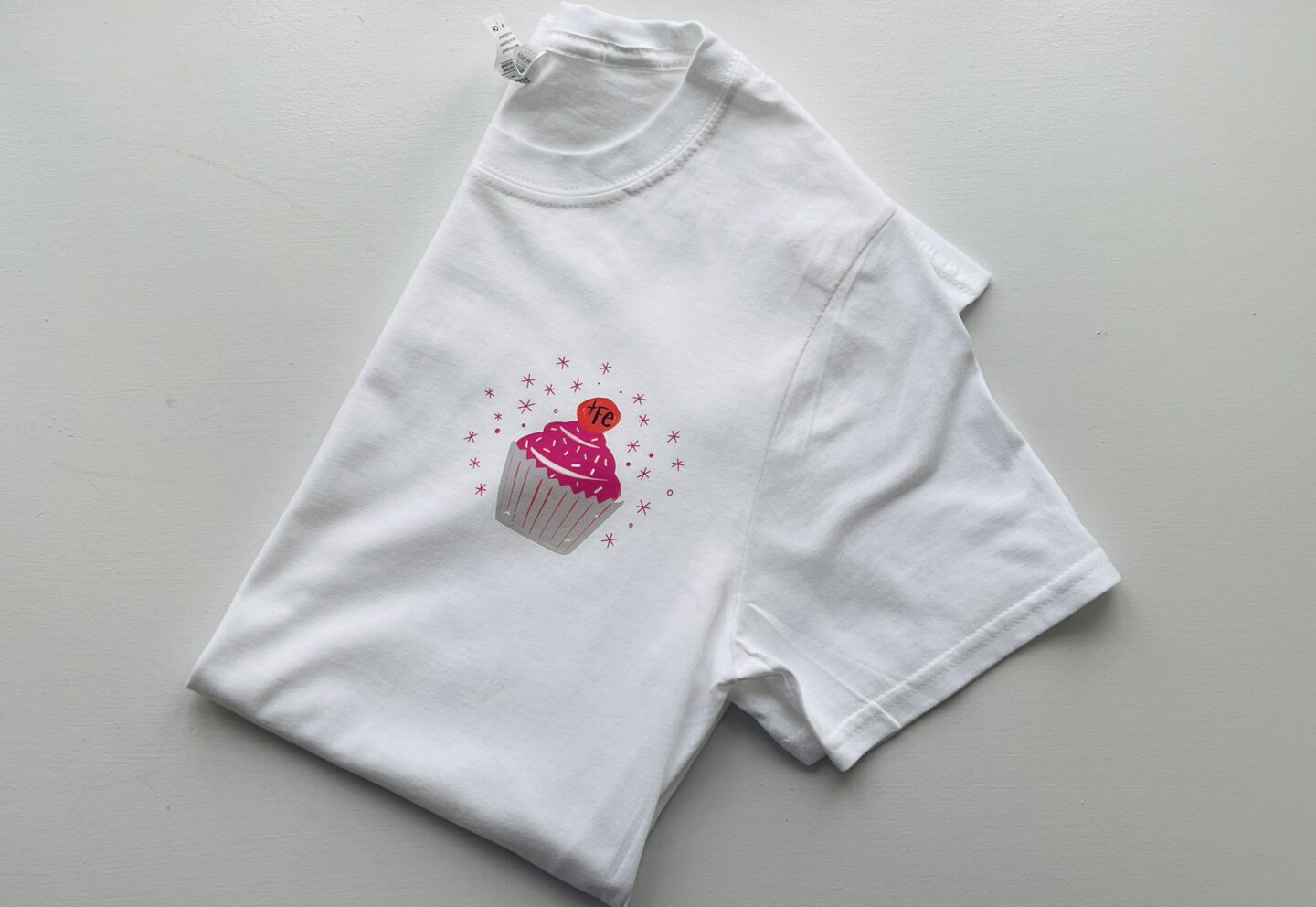
Melita Latham London is proud to support Haemochromatosis UK with the FE Cupcake charity T-shirt illustration by Jo Goodberry.
Please head over to www.melitalathamlondon.com to purchase your charity t-shirt. £10 for every t-shirt sold will be donated to HUK.
Alternatively, you can to donate to The Haemochromatosis Society directly and help spread the word about Haemochromatosis.
Haemochromatosis or otherwise know as GH which stands for genetic haemochromatosis, is a genetic disorder causing the body to absorb an excessive amount of iron from the diet.
As a result of this genetic condition, iron can build up in the body to toxic levels. This is also know as iron overload and is potentially very damaging if left untreated.
Iron is deposited in various organs – mainly the liver, but also the pancreas, heart, endocrine glands, and joints.
Iron overload as a result of haemochromatosis comes about because the body continually absorbs more iron from the diet than it needs. The body is then unable to rid itself of the excess, which slowly builds up over a number of years and damages the organs where it is stored. In HFE (Type 1) haemochromatosis it is rare for iron to build up to a damaging level in childhood, and in fact it often does not happen for several decades. Children can however overload iron as a result of Type 2 (Juvenile) haemochromatosis.
Symptoms
Symptoms of genetic haemochromatosis can include the following:
- Arthritis; may affect any joint but particularly common in the knuckle and first joint of the first two fingers (the bronze fist, illustrated above). If arthritis is found only in the first two finger joints this is highly suggestive of GH
- Chronic fatigue, weakness, lethargy
- Abdominal pain; sometimes in the stomach region or the upper right hand side, sometimes diffuse
- Neurological/psychiatric disorders; impaired memory, mood swings, irritability, depression
- Sexual disorders; loss of sex drive, impotence in men
- Absent or scanty menstrual periods and early menopause in women
- Bronzing of the skin, or a permanent tan, or grey tone
- Cardiomyopathy; disease of the heart muscle
- Diabetes (late onset type)
- Liver disorders; abnormal liver function, enlarged liver, cirrhosis, liver cancer
- Decrease in body hair
If you think you might have haemochromatosis make an appointment with your Doctor.
Diagnosis of genetic haemochromatosis (GH) is often made late. This is dangerous because untreated iron overload leads to organ damage and other problems, much of which is irreversible. Any of the common symptoms – especially in combination – should lead your doctor to arrange tests that may confirm GH at the earliest opportunity.
Please take the time to watch the youtube video to get a fully understanding of this disorder and to help spread awareness.
Content from the Haemochromatosis Society Website.
Thank you
Mel x
