Porto is one of those cities that reveals itself slowly. From the tiled facades of historic buildings to the winding streets that lead down to the Douro River, it’s a place where history and everyday life intertwine beautifully.
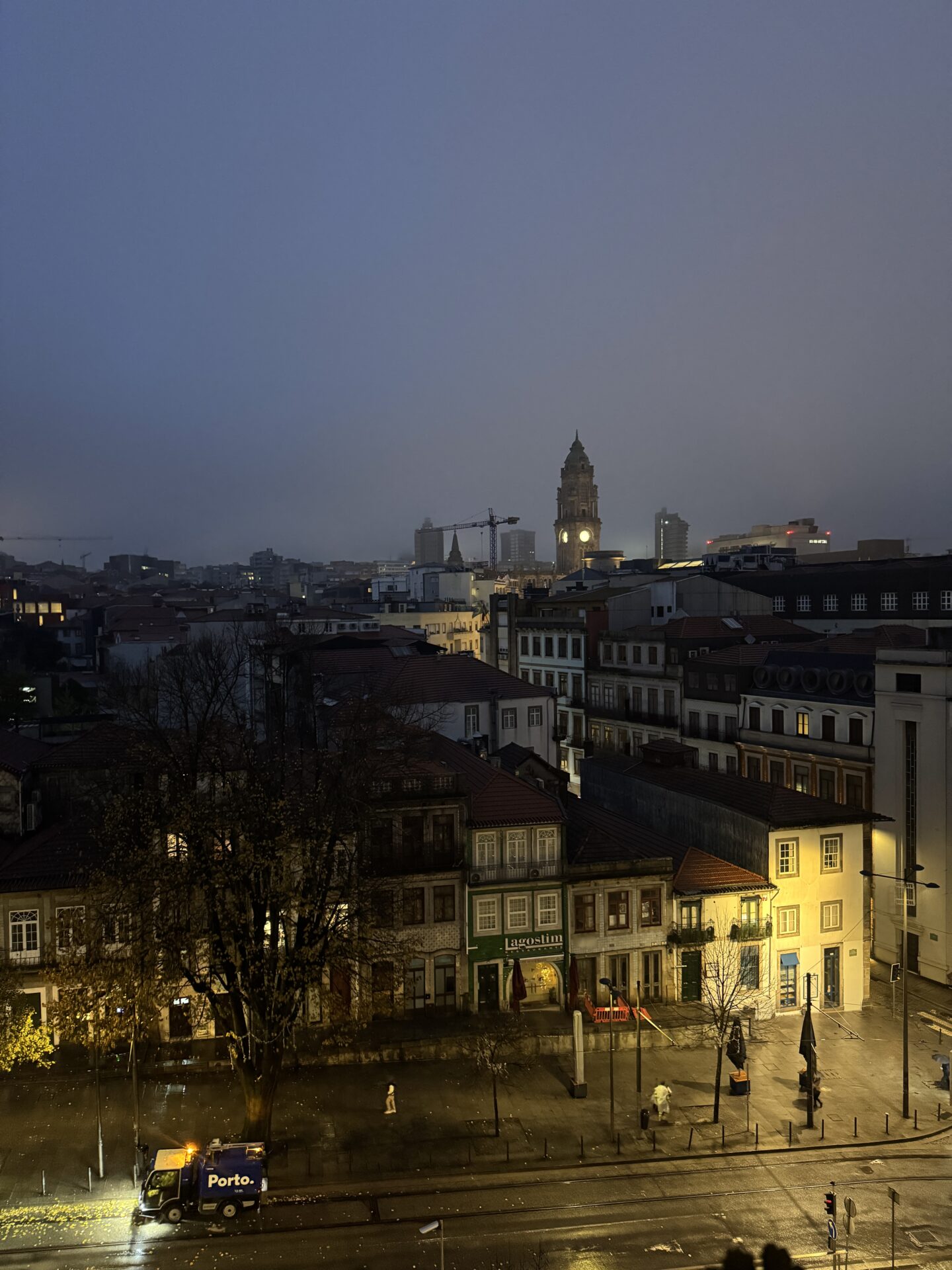
My husband and I visited Porto at Christmas, when the city had a festive atmosphere but the weather was, as expected, a little unpredictable. One moment there was sunshine, the next a burst of rain sweeping through the narrow streets.
Despite the changing weather, Porto proved to be a city full of character – from a historic hotel stay to wandering streets lined with intricate tiles.

Staying at Hospes Infante Sagres
For our visit we stayed at the beautiful Hospes Infante Sagres, located in Porto’s UNESCO-listed Old Town.
The hotel entrance immediately set the tone for the stay. The lobby was elegant yet welcoming, and the staff were incredibly accommodating from the moment we arrived.
We were shown to a suite that felt both historic and luxurious, complete with:
- a four-poster bed
- a lounge area
- a kitchenette
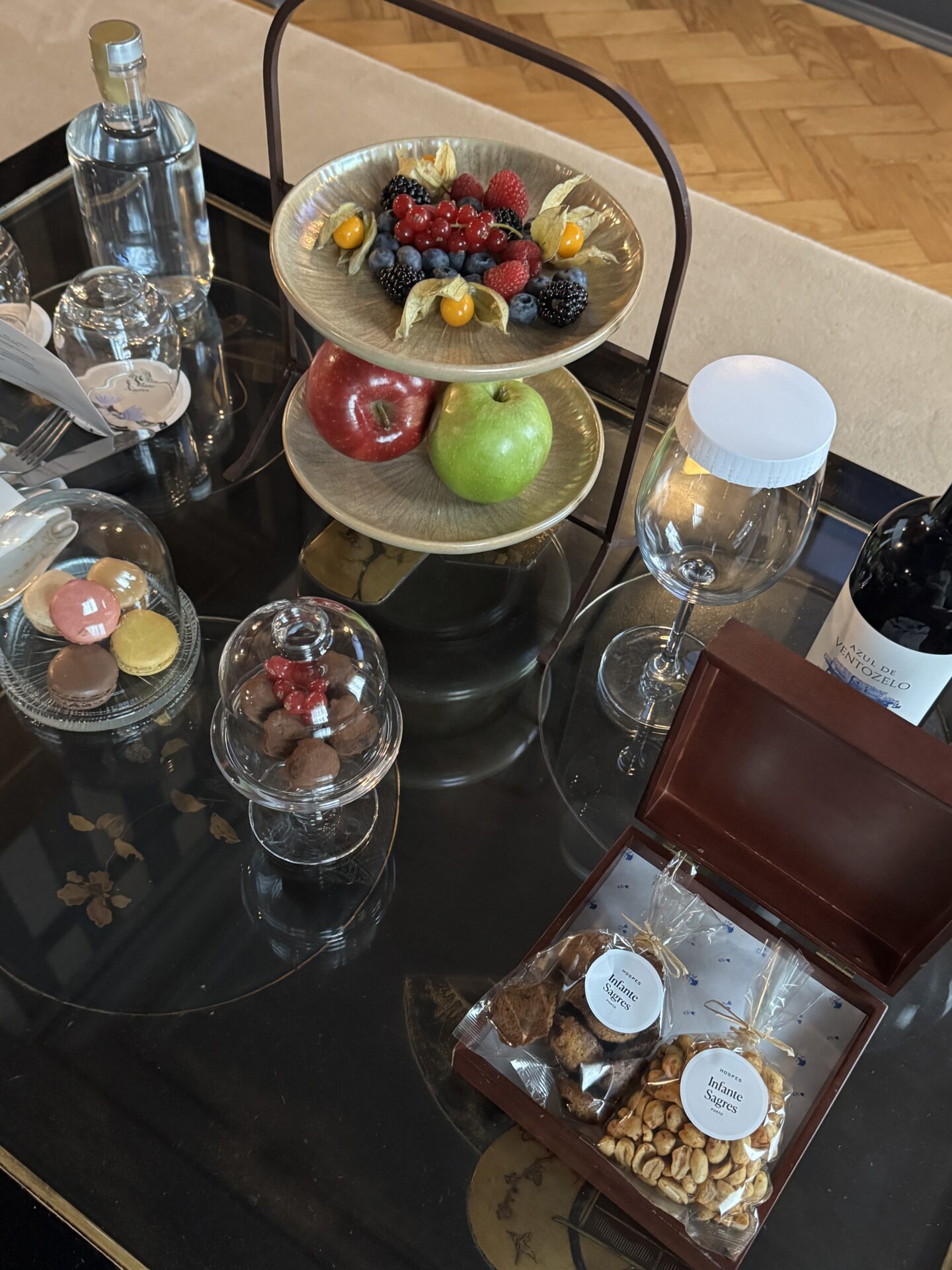
Waiting for us on the coffee table was a thoughtful welcome from the hotel – chocolates, fruit, snacks and a bottle of red wine, accompanied by a handwritten note from the staff.
It was one of those small gestures that instantly makes you feel at home.
A Hotel Full of Character
What stood out most about Hospes Infante Sagres was the interior design. The hotel blends historic architecture with contemporary details in a way that feels both refined and comfortable.
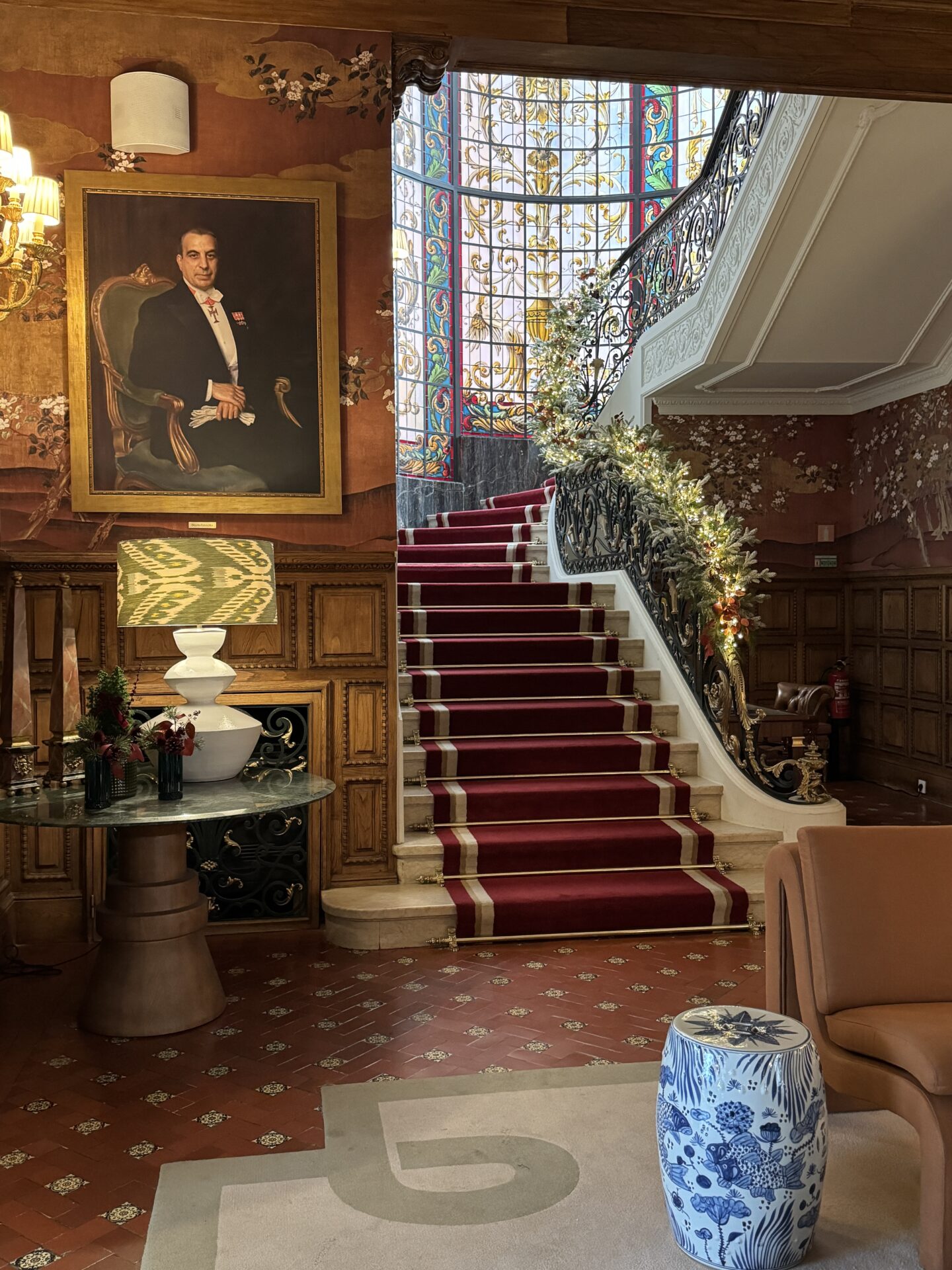
One of the most striking features was the stained glass window running up the staircase, stretching from floor to ceiling.
Another detail we loved was the vintage-style lift. You open the door manually and inside sits a red leather bench, making the short journey between floors feel like stepping back in time.
A Memorable Dinner at the Hotel
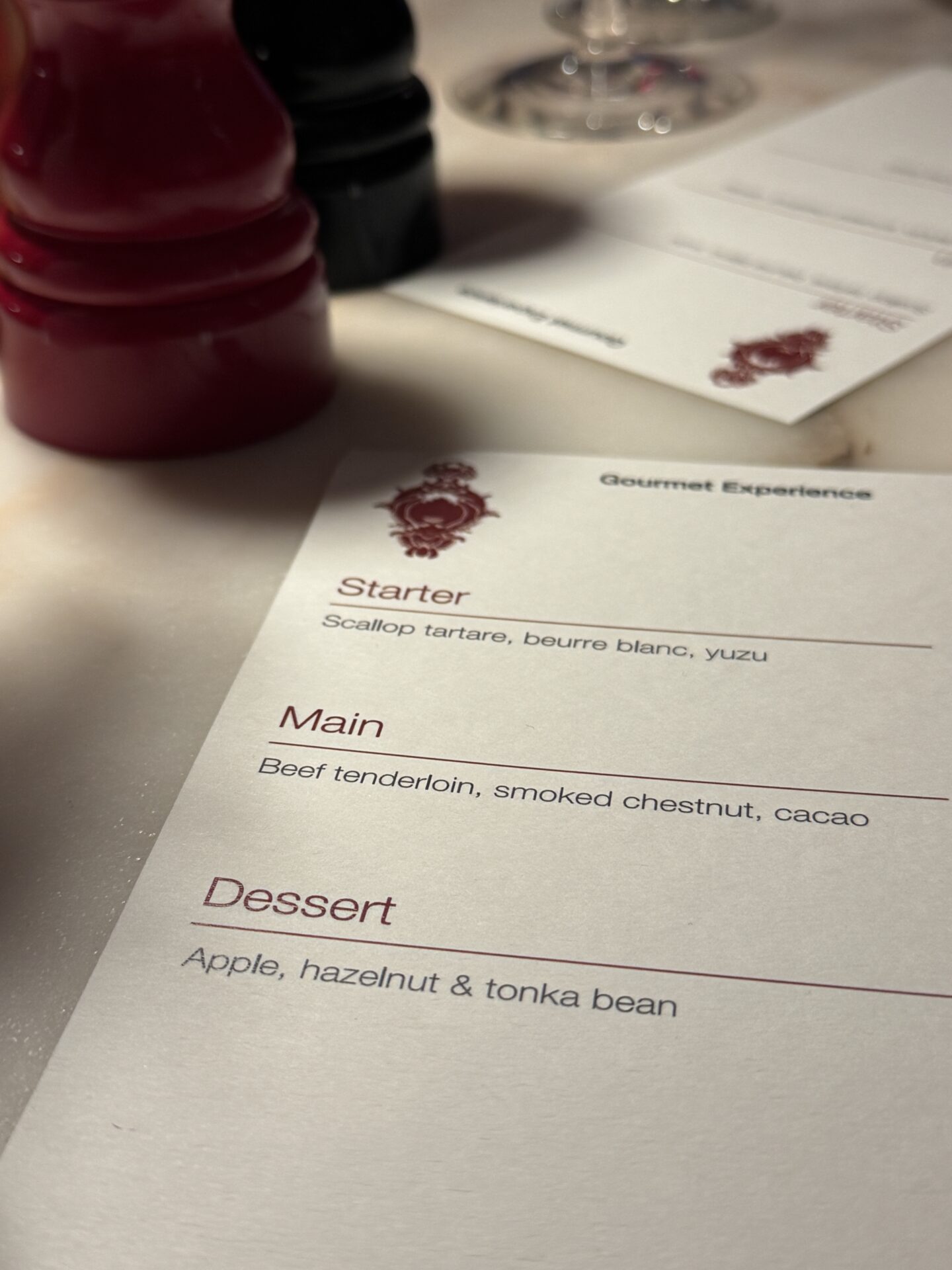
During our stay we opted for the gourmet dining experience at the hotel restaurant, which turned out to be one of the highlights of the trip.
The beef dish was exceptional, beautifully cooked and full of flavour.
Alongside the meal we tried several cocktails – some from the menu and others that the staff told us were secret recipes that hadn’t yet made it onto the cocktail list. It made the experience feel a little more personal and fun.
Another memorable dinner was at a restaurant at Tasco. Read the full article here. The best steak I’ve ever eaten in my entire life.
Exploring Porto’s Streets
One of the best things about our hotel was its perfect location. From Hospes Infante Sagres it was just a short walk to many of Porto’s restaurants, bars and historic streets.
We wandered through the city exploring local neighbourhoods and eventually found a traditional Portuguese restaurant serving hearty homemade dishes. The atmosphere was warm and welcoming.
Some of the recipes looked… adventurous – particularly the fish dishes. As someone who doesn’t eat fish, I’ll admit a few plates looked slightly intimidating, but the restaurant itself felt authentic and full of character.
The Famous Azulejo Tiles of Porto
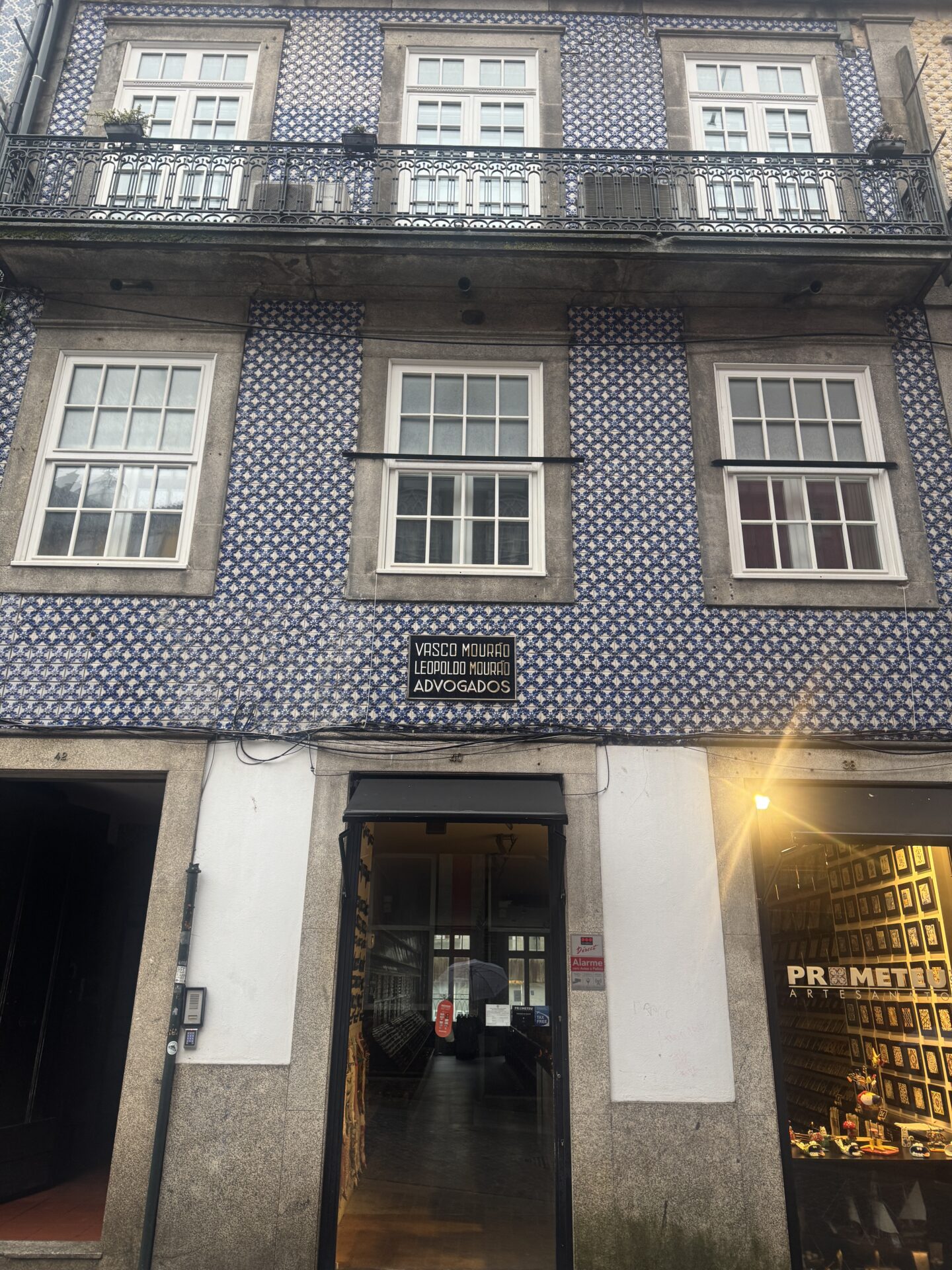
Walking around Porto, one of the first things you notice is the beautiful tiles covering many of the buildings.
These decorative ceramic tiles, known as azulejos, are a defining feature of Portuguese architecture.
The tradition dates back to the 15th century, when glazed ceramic tiles were introduced to Portugal through Moorish influence. Over time they evolved into a distinctive art form used to decorate churches, homes and public buildings.
Many tiles tell stories through their imagery, depicting historical events, religious scenes and everyday life.
In Porto, the blue-and-white tile patterns create an unmistakable identity for the city. Almost every street reveals another façade covered in intricate designs.
São Bento Station: Porto’s Most Beautiful Train Station
Another highlight of our walk through the city was São Bento railway station.
Even if you’re not catching a train, it’s worth visiting purely for the tile murals covering the walls inside the station.
The panels depict moments from Portuguese history and are made up of thousands of individual tiles. It’s one of those places where you find yourself standing still for a while, simply taking in the detail.
A Rickshaw Tour… in the Rain
We decided to try something a little different and booked a rickshaw tour around Porto.
Unfortunately, the weather had other plans.
Because of the rain, the driver pulled down the clear plastic rain cover, which meant we could barely see the city beyond the thick sheet protecting us from the downpour.
The ride lasted around 45 minutes, and the streets of Porto are not exactly smooth. The result was an incredibly bumpy journey where I spent most of the time laughing as we practically bounced around the three-wheeled rickshaw.
Our guide was great, though I’ll admit I don’t remember much of what he said – mostly because I was too busy trying not to headbutt the roof of the rickshaw.
Still, it was memorable.

Shopping on Rua das Carmelitas
One of the streets we enjoyed exploring was Rua das Carmelitas, a lively area filled with shops, cafés and local businesses.
The street is also famous for being home to Livraria Lello, often described as one of the most beautiful bookshops in the world.
Nearby you’ll also find souvenir shops, fashion stores and plenty of places to stop for coffee while exploring the city.
We also visited the Portugal national football team shop, which was a must-see for football fans.
Planning a Visit to Porto
Location
Porto is located in northern Portugal along the Douro River and is Portugal’s second-largest city after Lisbon.
Best Time to Visit
Spring and autumn are ideal for comfortable weather and fewer crowds. Visiting in winter, as we did, offers a festive atmosphere but you should expect occasional rain.
Ideal Stay
Two to three days is perfect for exploring Porto’s historic centre, restaurants and nearby wine lodges.
Booking Tip
Stay within the UNESCO-listed historic centre so you can easily walk to many of the main attractions.
Final Thoughts
Porto is a city that blends history and a relaxed charm.
Whether you’re wandering through narrow streets lined with azulejo tiles, discovering hidden restaurants or simply enjoying a glass of wine overlooking the Douro River, it’s a destination that rewards slow exploration.
Our winter visit brought a mix of sunshine, rain, laughter and memorable experiences – exactly the kind of travel stories that stay with you long after you return home.
And of course, no visit to Porto would be complete without experiencing one of the city’s most famous traditions.
Our next stop was a tour of Taylor’s Port, one of the most historic wine houses in the region – an experience that deserves a story of its own. Read our article about Taylor’s Port here.
Frequently Asked Questions About Visiting Porto
Is Porto worth visiting?
Yes, Porto is one of Portugal’s most beautiful cities, known for its historic architecture, wine culture and riverside views.
How many days do you need in Porto?
Two to three days is usually enough to explore the historic centre, visit wine lodges and enjoy the city’s restaurants.
What is Porto famous for?
Porto is famous for its port wine, azulejo tiles, historic architecture and the Douro River waterfront.
When is the best time to visit Porto?
Spring and autumn offer the best weather, though winter visits provide festive charm and fewer tourists.


